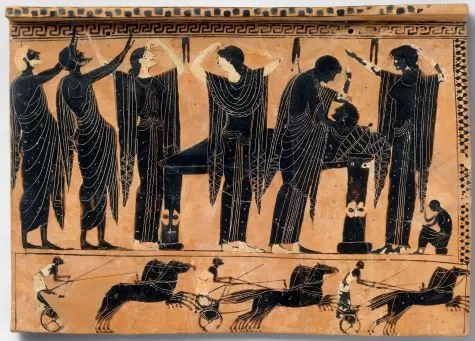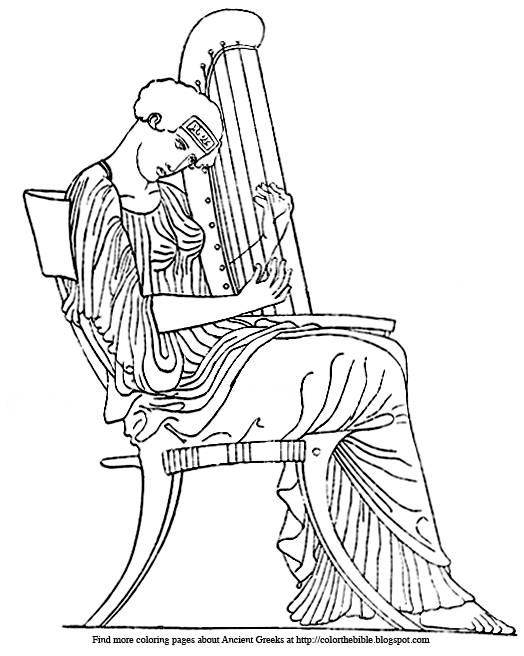
In the evolutionary course of ancient Greek art, the use of the contour played a special role since its beginnings, in the 11th century BC. In particular, in sculpture, whether it is in its free (statues, statues) or dependent (reliefs) form, artistic harmony was clearly expressed through the design rendering of the line in the organization and structure of the figures. Their design was based on the connection of the individual elements based on naturalistic proportions – a connection that was rendered organically and with natural symmetry, in contrast to the earliest depictions of figures in the Aegean area in monumental material (marble, limestone or amorphous limestone).
An important element of ancient Greek sculpture was also the coloring of the figures. Despite the common perception that ancient Greek marble sculptures were white, i.e. the color of the raw material, modern archaeological research confirms ancient written and iconographic evidence regarding the widespread use of color in marble works. Through the use of side lighting during photography, it is possible to detect and represent the color decoration of the sculptures. Therefore, ancient Greek sculptures are not simply truncated masses of inanimate inorganic matter, but are “living, talking stones” that testify to the taste, the morphoplastic imagination and the passion of their creators, who often proudly sign their works.
Through the presentation of representative works of ancient Greek sculpture up to the classical period, particular importance is given to the anthropomorphism of ancient Greek sculpture and the role of both contour and color up to the beginning of the 4th century BC is highlighted. The parallel examination of works of microplastics (torectural and miniature art) fills the gap created in the examination of the evolutionary course of ancient Greek sculpture by the lack of early monumental works.
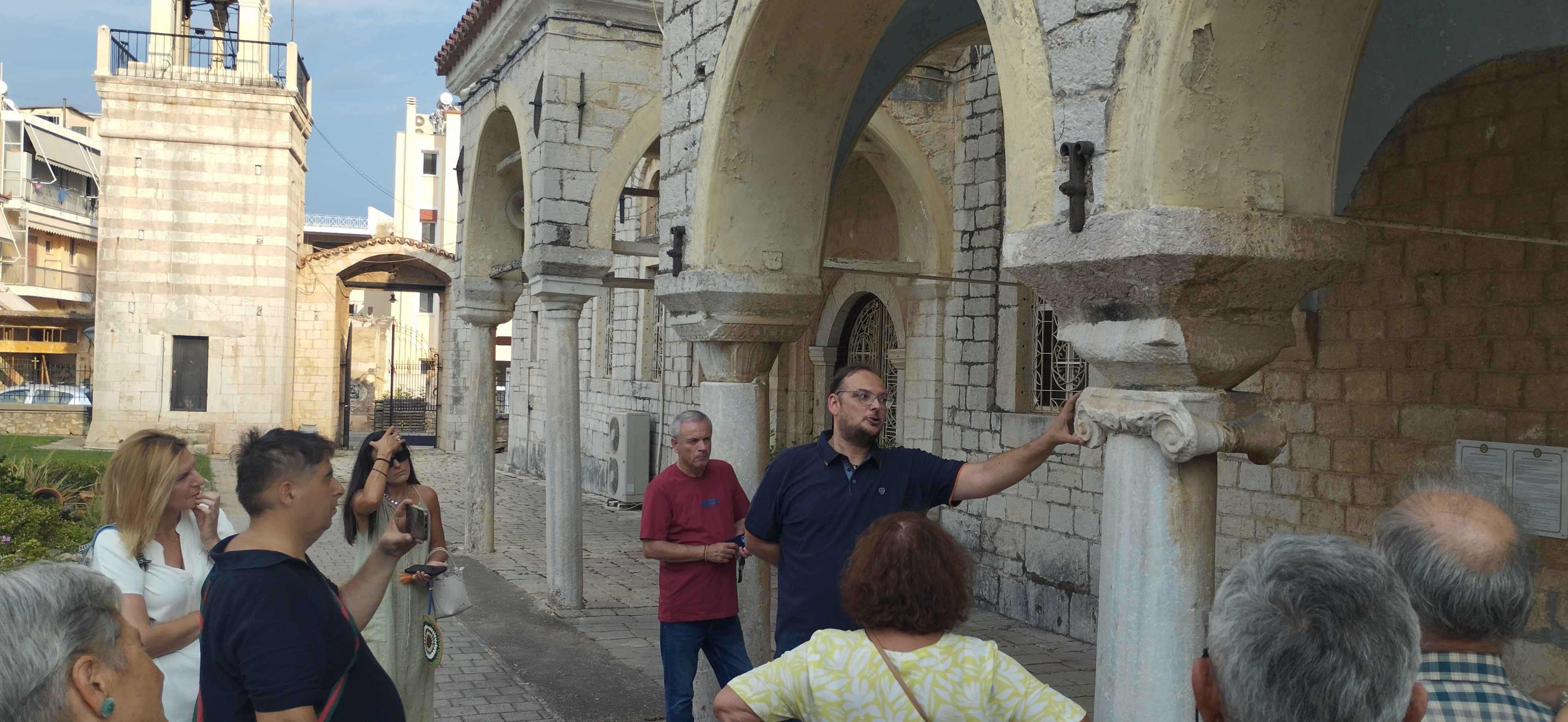
Participants in the workshop had the opportunity to experiment creatively on ancient Greek designs, practicing marble working techniques and creating copies in marble. Through the presentation of representative works from the beginnings of ancient Greek sculpture to the Classical period, Dimitrios Ath. Kousoulas (Archaeologist, Numismatist, Marble Engraver) explored the evolution of the human figure, the expressive role of contour, the harmony of proportion, and the significance of color in ancient sculpture. Bringing together archaeology, craftsmanship, and embodied learning, this experience offered an invitation to encounter ancient Greek sculpture not merely as a remnant of the past, but as a living language of memory, beauty, and creation.