With great success and emotion, the 9th event of the Telesilla Talks & Walks program was completed on Sunday, March 29, a co-organization of the non-profit organization The Arete Fund and the General State Archives – Argolida Department.
The action, titled “Pronoia & Neo-Byzantium: Their Foundation and Historical Journey through the Archives of the General State Archives – Argolida Department,” offered participants a unique experience connecting archival research with the living urban fabric.
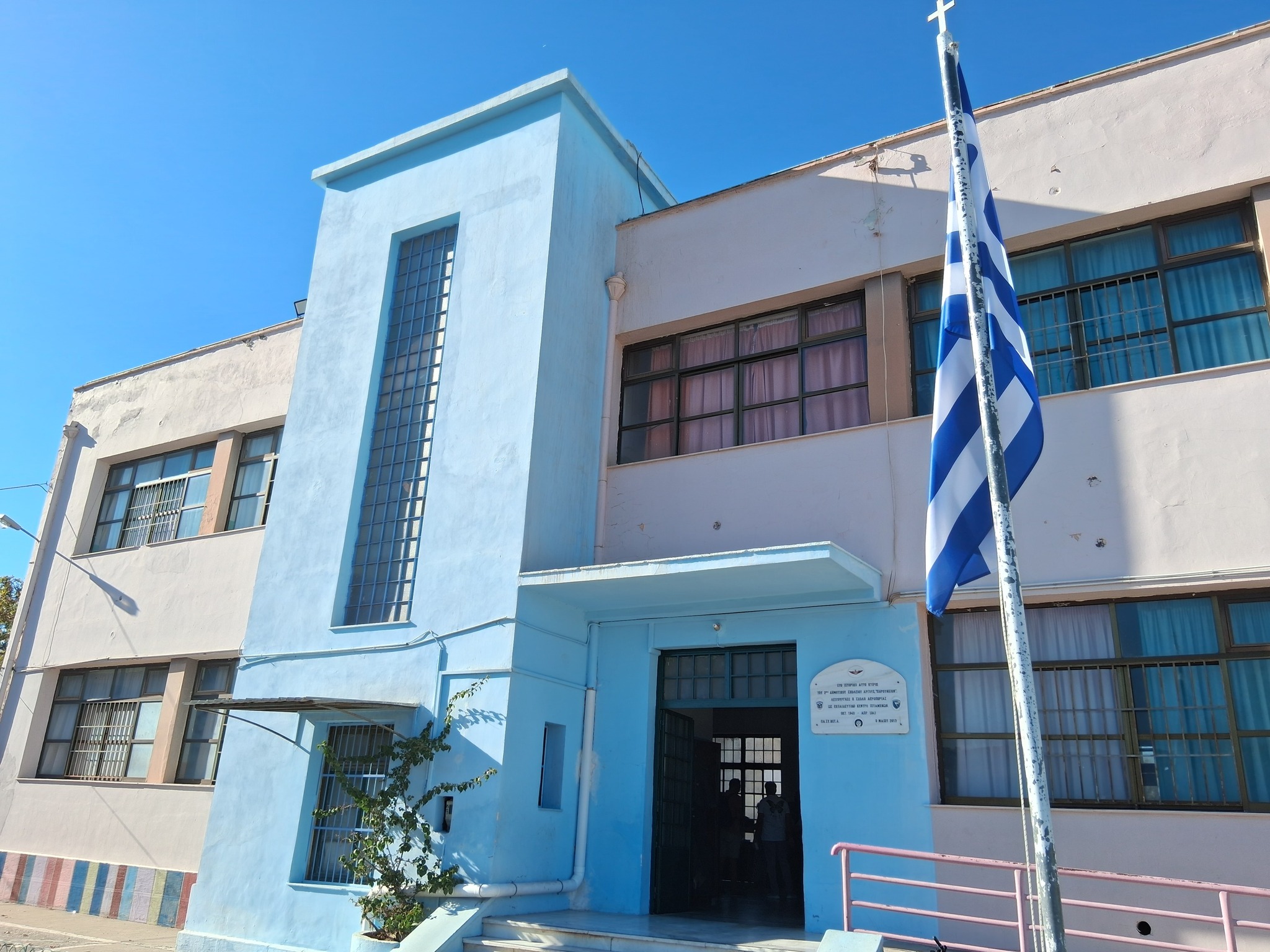
The route began at the headquarters of the General State Archives – Argolida Department, where the scientific staff of the service, Ms. Georgia Koskina, Ms. Eleni Koukouzeli, and Mr. Panagiotis Maragkos, guided the audience into the world of archives. Participants had the rare opportunity to come into contact with original documents, maps, and administrative records from the 19th and 20th centuries, gaining insight into the administrative structure and planning of the first refugee settlements.
A particularly memorable moment of the event was the valuable gift offered by the scientific staff of the G.A.K. to the participants: a rare “topographical plan of Nafplio and its surroundings” from 1897 and a photograph of Nafplio from 1890. These are historically significant documents, now made accessible to all, allowing participants to study the evolution of the city and hold in their hands a living piece of its cartographic history. At the same time, museologist and historical researcher Ms. Evgenia Petropoulou shed light, through her presentation, on the topic of urban refugee settlement (1922–1955), highlighting the challenges and the creation of “Neo-Byzantium.”
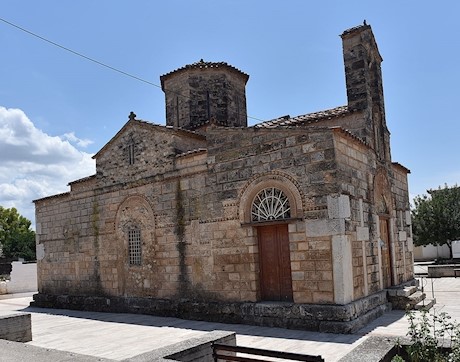
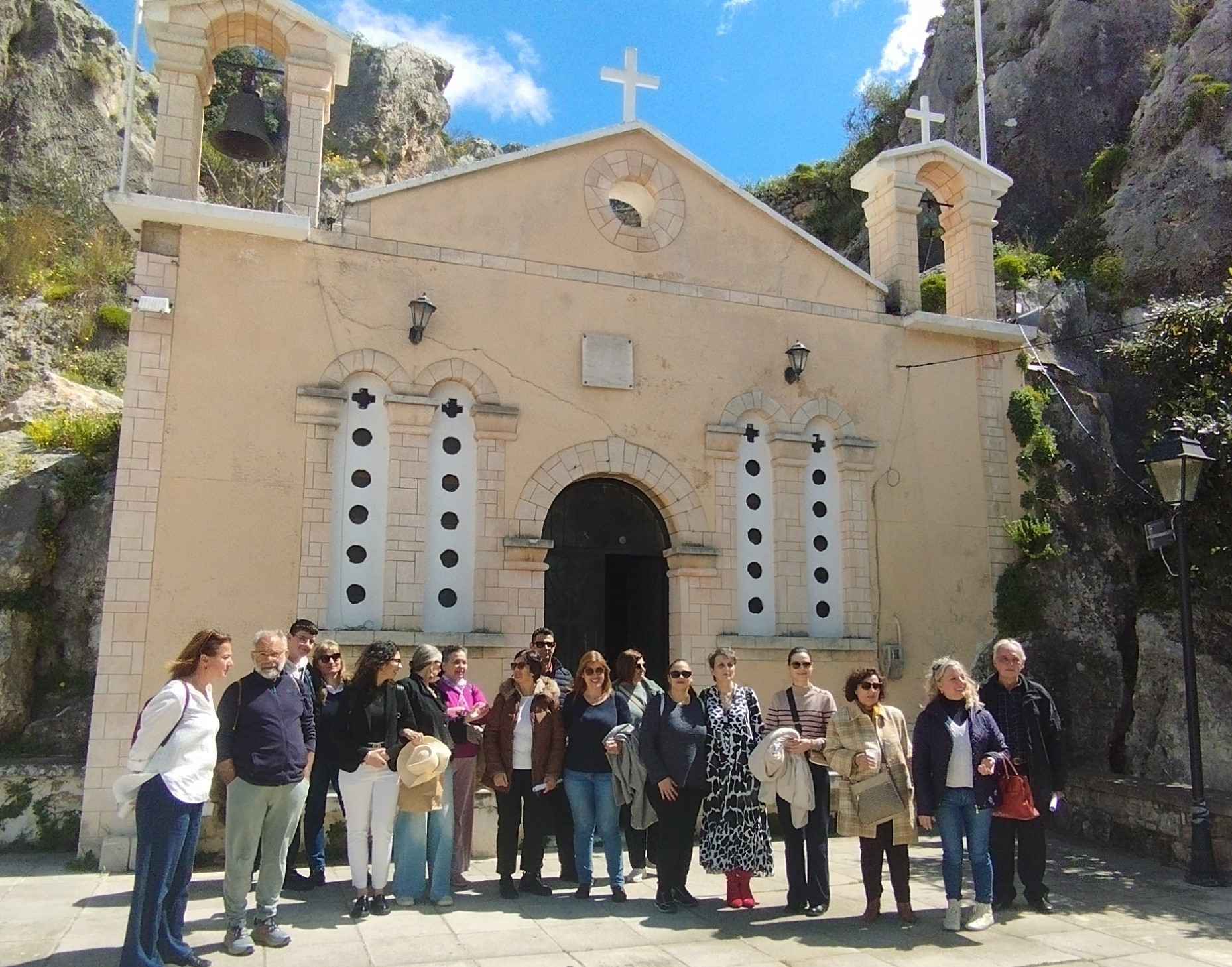
The group then followed a walking route in the Pronoia district, guided by conservator of antiquities Ms. Pagona Lagou. Proonia, the first organized refugee settlement created by Ioannis Kapodistrias to house Cretan and other refugees, served as the setting for an experiential tour of the Holy Church of All Saints and the Church of the Holy Trinity–St. John the Baptist.
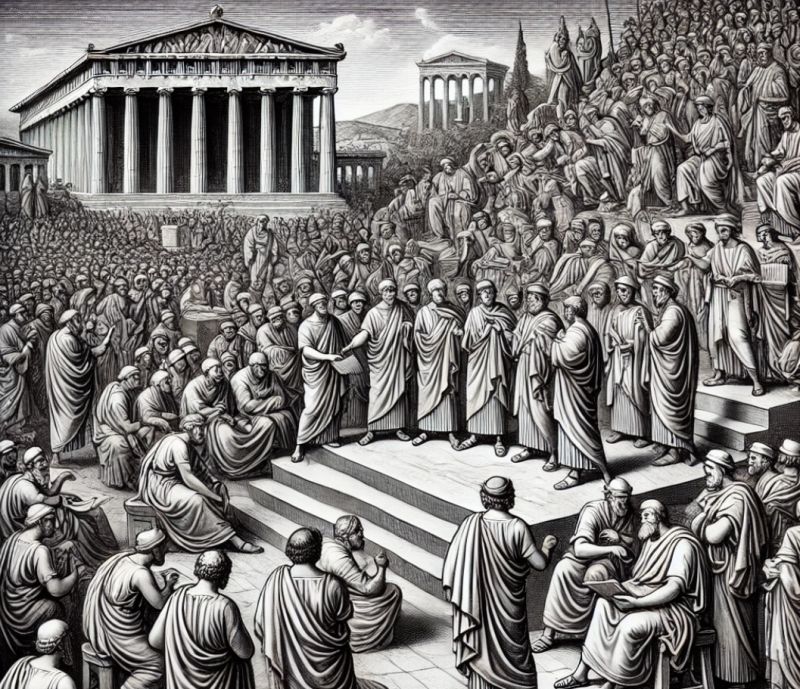
A central point of the route was Ethnosynelefsis Square, a site of great historical significance. There, in July 1832, the “Fourth Subsequent National Assembly of the Greeks” (in fact the sixth in sequence) convened, ratifying the appointment of Otto as king and granting a general amnesty. Participants had the opportunity to mentally reconstruct the moment of the sessions, which took place in a makeshift semi-outdoor structure in the open square, where today the bust of the fighter Dimitris Plapoutas stands.
The event concluded at a traditional café in the area with an open discussion on the meaning of “Pronoia,” from the vision of the Governor to the modern identity of the neighbourhood, confirming that memory remains alive when it becomes the subject of dialogue in public space.
We express our warm thanks to His Eminence Metropolitan of Argolis Mr. Nektarios for his kind support, which made the realization of the action in the local churches possible. Special thanks are also extended to the parish priest of the Churches of All Saints and Holy Trinity–St. John the Baptist, Father Konstantinos Serros, for his warm hospitality and his contribution to highlighting the spiritual and historical value of the monuments.
Finally, we warmly thank all participants who embraced this initiative, contributing to the creation of a community that reflects upon and rediscovers the history of its place.